
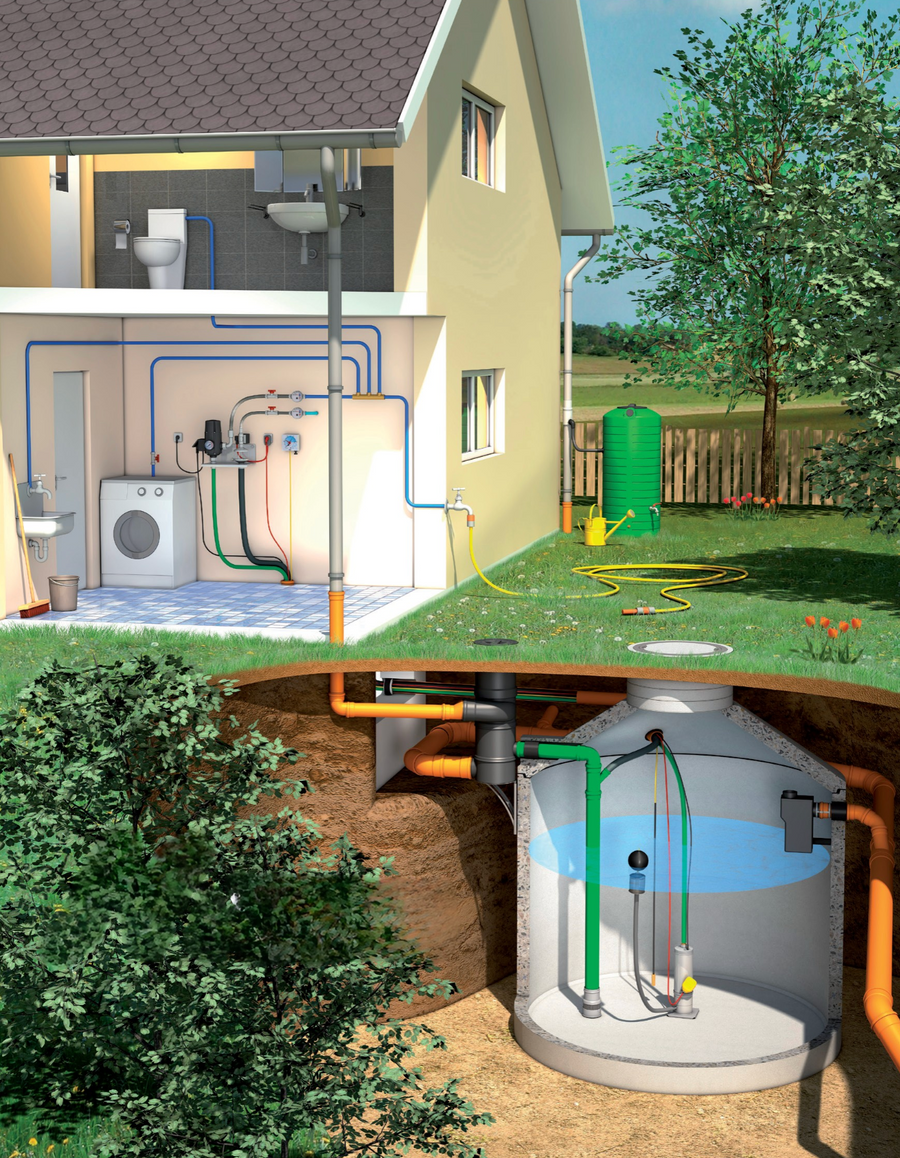
Rainwater is a resource most of us send directly into the sewer without thinking about it. But with a rainwater harvesting system, you can collect, clean, and reuse the rainwater that lands on your roof anyway – for toilet flushing, washing machines, and garden watering. It's a well-proven technology that thousands of Danish and European households already use daily.
Here's an overview of how a rainwater harvesting system works step-by-step, so you can assess if it's the right solution for your home.
From roof to tank — step by step
A rainwater harvesting system consists of a few familiar components that work together in a closed circuit. There's no advanced electronics or complicated systems — it's basic mechanics and filtration.
1. Collection from the roof
Rainwater flows from your roof down through the gutter, just as it does today. The difference is that the water is led through a filter before it reaches the tank. The filter removes leaves, twigs, and larger particles, so only clean rainwater reaches the tank. The most common filters are self-cleaning, which means minimal maintenance for you.
2. Storage in an underground tank
The water is stored in an underground tank, typically between 3,000 and 10,000 liters for an average household. The tank is designed to last for decades. Because the tank is underground, the water is protected from light and heat, which prevents algae growth and maintains stable water quality.
3. Pump and control
A small pump, often located in the utility room or basement, sends rainwater into the home's separate piping system when you flush the toilet or start the washing machine. Modern pumps run automatically and are designed to be quiet and energy-efficient. If the tank runs dry during a drought, the system automatically switches to regular drinking water, so you never notice a difference.
4. Consumption in the home
Rainwater is used for purposes that do not require drinking water quality: toilet flushing, laundry, and garden watering. These are the three largest water consumers in a household, besides baths and showers, and together they account for up to 50 percent of total water consumption.
What does it require of your home?
Most homes can be connected to a rainwater harvesting system, both new builds and existing houses. Here are the typical prerequisites:
Roof material. Most roof types are suitable: tile, concrete tile, slate, and roofing felt. Roofs with zinc or copper cladding are generally not recommended, as metal particles can affect the water quality of planted areas.
Space. The tank is buried and typically takes up no more surface area than a large bush. The distance from house to tank is usually not critical.
Separate pipes. Rainwater and drinking water must be carried in completely separate piping systems inside the home. This is a legal requirement and ensures that the two water types are never mixed. In new construction, it's easy to integrate from the start. For existing homes, it requires an adaptation of the pipe system.
Maintenance is simpler than you think
A well-functioning rainwater harvesting system requires very little from you in everyday life. Typical maintenance looks like this:
- Once or twice a year, you should check the filter at the tank and clean it if it's clogged. Most filters can be cleaned in five minutes.
- The tank itself should be inspected annually to ensure that no sediment has accumulated at the bottom.
- The pump is usually maintenance-free for many years, but it's good practice to listen for unusual noises and check that the automatic switch to drinking water is working correctly.
Overall, the maintenance is comparable to what you already do for your home — it's about a couple of simple checks throughout the year.
A proven technology
Rainwater harvesting systems are not new technology. In Germany, private rainwater harvesting systems have been common for over 30 years, and there are now more than two million installed systems in the country.
Danish regulations and standards follow European norms, and the products sold in Denmark are typically certified according to applicable EU standards. When you choose a rainwater harvesting system, you are therefore choosing a solution with solid documentation and many years of experience behind it — not an experiment.
Want to know more about what rainwater can be used for and how to ensure the best water quality? Read our next article: "Is rainwater safe to use?"